











About Challenge Rush
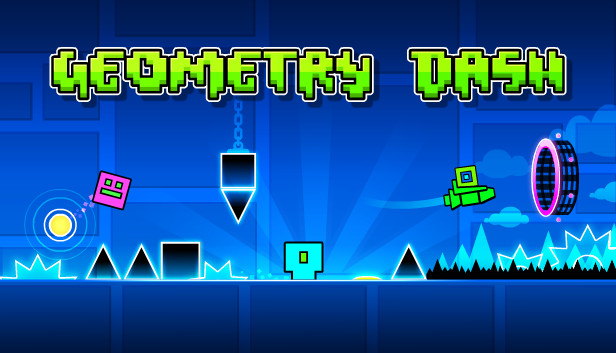
Challenge Rush is a precision platformer whose primary input can change meaning with the active form. A cube-like jump and a flying form should be approached as different movement problems, even when both use the same button.
How to Play Challenge Rush
Begin in Practice Mode and use checkpoints to work on a short obstacle sequence. Press the left mouse button, Up Arrow or Space to control the icon as it advances. Learn the approach to each form transition, then try Normal Mode to complete the level in one run; a collision there returns you to the beginning.
Practise a Transition, Then the Whole Route
Place a checkpoint far enough before a difficult section to reproduce the approach, not just the obstacle itself. Practise the timing leading into the transition and the first movement afterward. A form that flies asks you to control a path differently from a form that jumps, even though the same input is used.
Once the short sequence feels repeatable, connect it to the preceding section. Normal Mode then asks you to carry those decisions through the level without relying on practice checkpoints.
Controls
| Input | Action |
|---|---|
| Left mouse button, Up Arrow or Space | Jump or activate the current form’s movement. |
Practical Tips
- Rebuild the timing after a form change rather than repeating the previous jump rhythm.
- Place a practice checkpoint before a difficult transition so you can rehearse its approach as well as the obstacle after it.