










Slap & Run
1. Game Overview
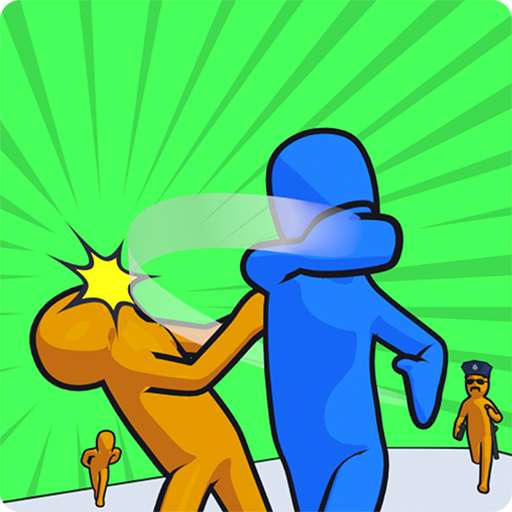
Slap & Run is an endless runner / reflex arcade game built around a clear challenge: move through the course, react to incoming hazards, and maintain a clean forward rhythm. The action takes place in an urban course of roads, traffic, ramps, and tight directional choices. Its rules are easy to understand, but the route asks for increasingly accurate decisions as speed, obstacle density, or level complexity rises. The main objective is to survive the route, complete its stages, or travel farther than previous attempts. Each attempt gives immediate feedback, allowing players to refine their line and timing without a long setup. What makes Slap & Run worth trying is the way it turns a small control set into a meaningful skill test. The original game page emphasizes elements such as unlockable variety, immediate browser play, readable visual feedback. Those systems make success feel earned rather than automatic. A clean input can carry the player through several hazards, while one rushed correction can create a difficult recovery. The result is a game that works well for a short break but still supports repeated practice, score improvement, or level completion. The strongest appeal comes from visible mastery. Early attempts teach how the movement responds; later attempts are about looking farther ahead, choosing safer angles, and knowing when to commit. A collision, missed platform, or badly timed action ends the attempt or returns the player to a checkpoint. Restarts are therefore part of the learning loop instead of a punishment. Players who enjoy responsive browser games, fast decisions, and measurable improvement will find plenty of reasons to return. Whether the goal is a new distance record, a completed stage, or a cleaner run, Slap & Run keeps the next objective easy to understand and satisfying to pursue.
Key Details:
- Genre: Endless Runner / Reflex Arcade
- Difficulty Level: Variable — the route becomes faster and less forgiving
- Average Play Time: 5–15 minutes per session
- Best For: players who like quick runs, obstacle reading, parkour, and high-score improvement
2. How to Play
Getting Started:
- Start the game and use the opening moments to test how strongly each input changes movement.
- Hold a safe central position while identifying the first obstacle, turn, or landing area.
- Use short, deliberate inputs to create a clean line, then release before overcorrecting.
- Prioritize survival and route learning before taking optional pickups or aggressive shortcuts.
- After a mistake, restart and change one decision instead of repeating the same rushed approach.
Basic Controls: swipe controls on touchscreens. Follow the in-game prompts because desktop and mobile builds may present equivalent actions differently.
Objective: Survive the route, complete its stages, or travel farther than previous attempts. Success comes from combining early route recognition, controlled movement, and consistent execution.
3. Game Features & Highlights
- ✓ Unlockable variety — lets players personalize later attempts.
- ✓ Immediate browser play — makes it easy to start another attempt without a long setup.
- ✓ Readable visual feedback — helps players recognize safe routes and correct mistakes.
- ✓ Escalating difficulty — keeps early play approachable while preserving a high skill ceiling.
- ✓ Quick restarts — support focused practice and a strong one-more-run loop.
4. Tips & Strategies
Beginner Tips:
- Keep to the center whenever possible so there is room to correct in either direction.
- Avoid holding movement keys continuously; long inputs are a common cause of overshooting.
- Use the first few attempts to learn handling and aim for one small improvement at a time.
Advanced Strategies:
- Read two obstacles ahead and begin positioning before the immediate hazard fills the screen.
- Enter difficult sections from a stable line so the next correction can remain small.
- Use characters as feedback, balancing optional rewards against the safest route.
What to Watch Out For:
- Sudden speed changes can amplify an otherwise normal input; shorten corrections after boosts or steep drops.
- Visual distractions can hide the real route; focus on platform edges, openings, and repeating movement cycles.
5. Game Elements Explained
Running Rhythm and Movement: This system determines how every input changes position, speed, and the next available route. The source controls for Slap & Run include swipe controls on touchscreens. The safest way to learn is to make one short input at a time and watch the full response before correcting again. Holding a direction too long often creates excess momentum, while repeated panic inputs can make the character, ball, or vehicle oscillate across the course. A centered starting line provides more room to react in either direction. Movement also affects preparation. Entering a jump, corner, gate, or rotating section from a stable line gives the next action a larger margin for error. Players should release an input once the intended line is established instead of steering continuously. At higher speed, the goal is not to react more aggressively; it is to react earlier with smaller corrections. Practice the opening section until the relationship between input length and movement distance feels predictable. Once that control becomes automatic, attention can shift away from the player character and toward upcoming hazards. Effective use of this system turns survival from a series of emergencies into a planned sequence of controlled movements.
Obstacle and Route Reading: Hazards are the main source of difficulty in Slap & Run, but they also provide the information needed to improve. Rather than watching only the immediate object, scan farther along the route and identify the next two decisions. Look for open lanes, platform edges, moving barriers, color rules, gaps, ramps, or timing cycles. The correct route is usually easier to follow when the player enters from a controlled central position. Route reading becomes more important as the pace increases. Waiting until a hazard reaches the character leaves too little time for a smooth response and encourages overcorrection. Begin the movement as soon as the safe opening is clear, then check the landing or exit before committing to the next action. Repeated layouts should be treated as patterns to learn, while changing layouts require flexible positioning and a reserve of space. A collision, missed platform, or badly timed action ends the attempt or returns the player to a checkpoint. When a run ends, identify whether the mistake came from late recognition, excessive input, or a poor entry line. Correcting one cause at a time produces faster improvement than simply restarting at full speed.
Progression, Scoring, and Rewards: Slap & Run measures progress through characters. These markers give each attempt a practical purpose. A new player should first prioritize survival or reliable stage completion, because reaching later sections reveals more of the game and creates better practice opportunities. Optional rewards become more valuable once the basic route feels stable. When collectibles, unlocks, power-ups, alternate modes, or customization are available, treat them as part of a longer progression loop rather than a reason to abandon a safe line. Collect easy rewards that already sit on the route, but avoid crossing several hazards for a small gain. Temporary boosts should be activated or collected where there is enough room to handle the change in speed or movement. Scores are most useful as feedback: compare attempts to see whether earlier route reading and cleaner control are producing longer runs. If the game offers levels, complete consistent routes before chasing perfect performance. If it uses endless scoring, set small distance targets and improve them gradually. This system rewards repeatable execution, making steady progress more dependable than one risky attempt.
6. Frequently Asked Questions
Q: How do I control the game effectively? A: Begin with swipe controls on touchscreens. Use brief inputs, observe the full movement response, and return to a stable line before making another correction.
Q: What should I do if I keep failing at the same obstacle? A: Slow down your decision-making, watch the obstacle's full cycle, and adjust the entry line earlier. Change only one part of the approach per attempt so the result is easy to evaluate.
Q: Is this game compatible with mobile devices and modern browsers? A: It is designed for browser play. A current version of Chrome, Edge, Firefox, or Safari is recommended. Touch support depends on the embedded build, so desktop controls may provide the most consistent experience when no touch prompts appear.
Q: Can I save my progress? A: Save behavior depends on the game build. Unlocks or completed levels may use browser storage, while an endless run normally resets after failure. Keep browser storage enabled and avoid clearing site data if you want locally stored progress to remain available.
Q: How do I unlock new features, modes, or rewards? A: Continue completing stages, improving distance, and collecting any available currency or objectives. Check the game's menu after successful runs because skins, modes, achievements, or harder routes usually become available through performance milestones.