



















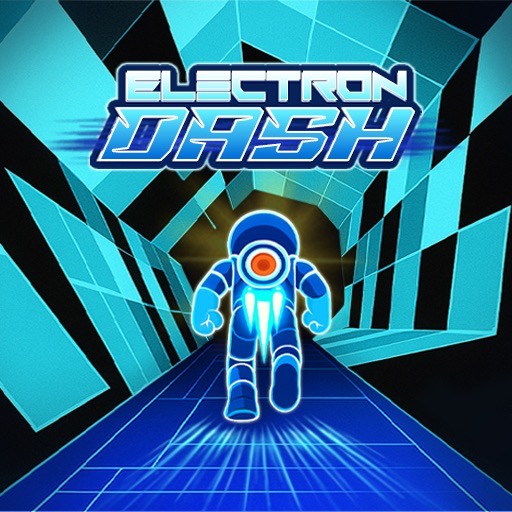
Electron Dash
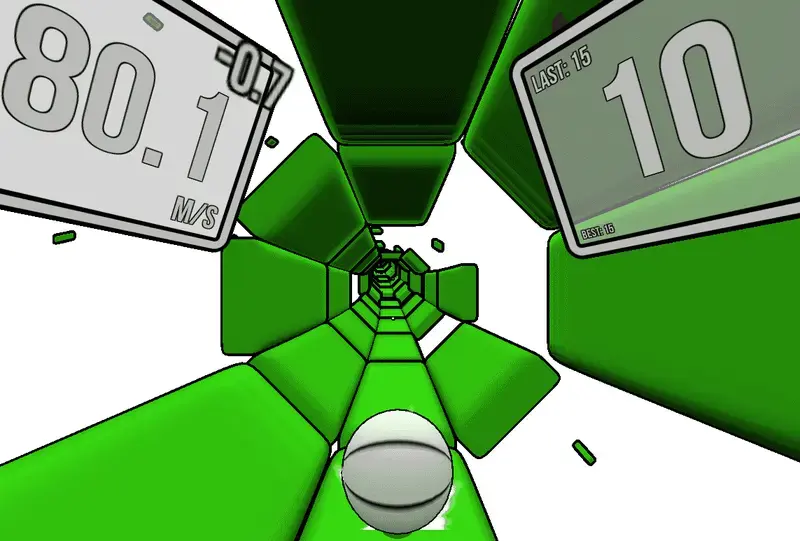
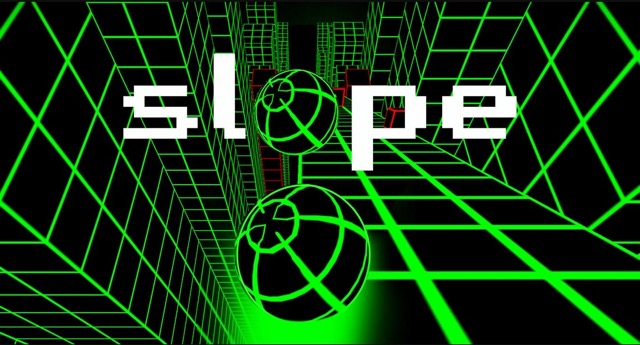
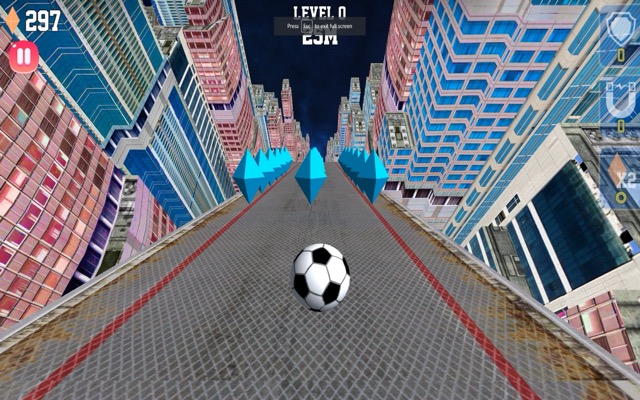
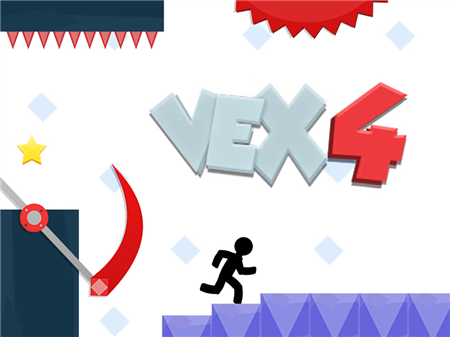
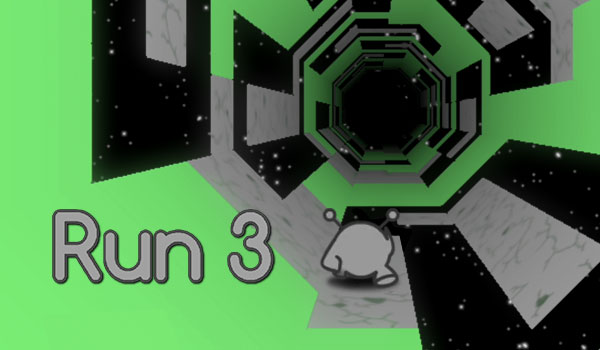
Electron Dash puts you inside a neon space tunnel and dares you to run as far as physics will allow. You're not controlling a ball or guiding an alien — you're sprinting as a running figure through a glowing corridor that throws laser beams, unstable tiles, and gaping voids at you with increasing intensity. The premise is simple; surviving it is anything but.
What separates Electron Dash from other tunnel runners is the combination of hazard types it layers together. Lasers demand precision jumping — go too low and you're hit, go too high and you overshoot a stable landing zone. Unstable tiles disappear moments after contact, punishing any hesitation mid-run. Gaps appear suddenly and frequently, requiring both reflexes and positioning awareness. Navigating all three simultaneously, at a speed that never stops climbing, is a genuine test of composure under pressure.
The heart mechanic is Electron Dash's most distinctive feature. Hearts scattered throughout the tunnel grant extra lives — a genuine safety net that makes the game more forgiving than most endless runners of this type without removing the tension entirely. Managing your heart count, knowing when to risk a dangerous path for a life pickup, and understanding when to let a heart go because the positioning cost is too high — these are the strategic decisions that separate casual runs from exceptional ones.
A global leaderboard tracked across daily, weekly, monthly, and all-time timeframes gives competitive players a nuanced ranking system to chase, while the game's approachable controls and space setting make it welcoming to newcomers and families alike. If you enjoy the Slope series but want a runner with more explicit hazard variety and a forgiving lives system, Electron Dash delivers exactly that.
Key Details:
| Field | Info |
|---|---|
| Genre | Endless Runner / Arcade |
| Difficulty Level | Variable (escalates with speed and hazard density) |
| Average Play Time | 3–15 minutes per run |
| Best For | All ages, endless runner fans, competitive leaderboard players |
How to Play Electron Dash?
Getting Started:
- Launch the game and press Play to enter the neon space tunnel.
- Your character begins running automatically — steer and jump immediately.
- Jump over laser beams before they make contact — do not run through them.
- Move around unstable tiles quickly; standing on them briefly before they disappear ends your run.
- Collect hearts scattered throughout the tunnel to bank extra lives for use when you fall or take a hit.
Basic Controls:
| Key | Action |
|---|---|
A or ← Left Arrow | Move left |
D or → Right Arrow | Move right |
W, ↑ Up Arrow, or Space | Jump |
Objective: Run as far as possible through the endless neon tunnel without being struck by laser beams or falling into gaps. Collect hearts along the route to accumulate extra lives — each heart gives you one additional chance to continue from the start if your run is cut short. Your score reflects total distance travelled. Compete on the global leaderboard across daily, weekly, monthly, and all-time rankings to measure your performance against the worldwide player base.
Electron Dash Features & Highlights
✓ Heart-based extra lives system — Collect hearts throughout the tunnel to bank additional lives, giving you a meaningful safety net that rewards smart collection and strategic risk-taking.
✓ Multi-hazard tunnel design — Laser beams, unstable tiles, and sudden gaps each demand a different response, creating a more varied and layered challenge than single-obstacle endless runners.
✓ Multi-timeframe leaderboard — Daily, weekly, monthly, and all-time rankings give every run immediate competitive significance regardless of where you currently sit in the all-time standings.
✓ Neon space tunnel aesthetic — A vivid, glowing corridor environment that makes hazards visually distinct and the run feel fast, immersive, and kinetically exciting.
✓ Accessible controls for all skill levels — Standard WASD and arrow key inputs with a single jump button — intuitive enough for first-time players, precise enough for high-level competitive runs.
Electron Dash Tips & Strategies
Beginner Tips:
- Collect hearts whenever they're safely on your path. Hearts are the most valuable resource in the tunnel — each one is an additional life that can resurrect your run from the very beginning. Don't dismiss them in favour of pure speed; a heart on a safe line is always worth taking.
- Jump early for lasers, not at the last moment. Laser beams require clean vertical clearance. Jumping when the laser is directly in front of you is almost always too late. Identify lasers two or three steps ahead and initiate the jump in advance, giving yourself time to clear it fully and land cleanly.
- Move off unstable tiles the instant you land on them. There's no benefit to pausing on a crumbling tile. The moment your character's feet touch an unstable surface, keep moving forward — hesitation is what turns a navigable section into a fall.
Advanced Strategies:
- Evaluate heart positions against their collection cost. Not every heart is worth the risk of collecting. A heart sitting at the edge of a gap, beside a laser, or on a cluster of unstable tiles may cost you a life to collect — the opposite of the benefit it provides. Only pursue hearts that sit on paths you'd naturally take or that require minimal, safe deviation.
- Use extra lives as confidence to push further. Players with multiple hearts banked should run more aggressively in stable tunnel sections — building distance while the safety net is intact rather than playing conservatively at all times. Reserve caution for laser and unstable tile sections, where precision matters most.
- Read laser patterns before committing to a jump. Some laser configurations in later tunnel sections involve multiple beams at different heights. Before jumping, identify the full beam layout and jump height required — clearing the first beam only to land on a second is a common advanced-stage error.
What to Watch Out For:
- Chasing hearts that require unsafe route deviation. The most common strategic mistake in Electron Dash is pursuing a heart that's positioned adjacent to a laser or over an unstable tile cluster. A heart that costs you a life to collect provides zero net benefit. If the collection path looks dangerous, let it go.
- Unstable tiles in the middle of laser avoidance jumps. Some sections combine both hazard types — a laser to jump over, landing on a tile that immediately crumbles on contact. In these sections, plan your landing zone before jumping, not during the jump. If the landing tile looks unstable, aim to land and immediately move forward rather than settling.
Electron Dash Elements Explained
Heart & Extra Lives System
The heart system is Electron Dash's most distinctive mechanical feature and the element that most separates its difficulty profile from comparable endless runners. Hearts are scattered throughout the neon tunnel at irregular intervals, each one granting an additional life when collected. Extra lives accumulate with each heart gathered and can be used automatically when the run would otherwise end — a laser hit or a gap fall that would terminate a heartless run instead triggers a resurrection from the tunnel's start, with one life deducted from the bank.
This system fundamentally changes the risk calculus of every run. In a standard endless runner, each run is all-or-nothing — one mistake ends everything. In Electron Dash, a well-stocked heart reserve allows players to make one or two recoverable errors without losing the run entirely. This makes the game more forgiving for newer players learning the hazard patterns, while still maintaining meaningful consequence for careless play that burns through lives faster than the tunnel provides them.
For experienced players, the heart system introduces a strategic layer that pure survival games lack: active resource management. Knowing your current life count, reading the tunnel ahead for heart positions, and deciding which hearts are worth the collection risk versus which should be abandoned is a decision-making skill that separates good Electron Dash players from great ones.
Hazard System
Electron Dash's hazard system is built on three distinct obstacle types that each demand a different player response — creating a tunnel that tests a broader range of skills than single-hazard endless runners.
Laser beams are the most visually striking hazard and require precise vertical clearance. They stretch across the tunnel at fixed heights and must be jumped over cleanly — running through one ends the run immediately, or deducts a life if hearts are banked. The key skill for lasers is timing: identifying them early and jumping in advance, rather than reacting when they're already directly ahead.
Unstable tiles are the most time-sensitive hazard. They look similar to standard tunnel floor sections but crumble a moment after contact. The response required is constant forward momentum — never standing still on a tile that might be unstable. Players who develop a habit of reading tile texture and colour differences identify unstable sections before stepping on them rather than discovering their instability mid-run.
Gaps are the most straightforward hazard in concept but the most dangerous when combined with the other two. A gap appearing at the end of a laser jump — requiring the player to land precisely on a narrow platform rather than safely anywhere on solid floor — is the game's most demanding scenario type.
Leaderboard System
Electron Dash's leaderboard tracks competitive rankings across four distinct timeframes: daily, weekly, monthly, and all-time. This multi-window structure gives the scoring system a depth and immediacy that single-ranking leaderboards can't match.
The daily leaderboard resets every 24 hours, creating a recurring competitive cycle where strong runs have immediate ranking impact regardless of whether all-time records are within reach. A player who posts an exceptional run on any given day can rank at the top of the daily board even if their all-time position is modest — making each session feel competitively meaningful at multiple levels simultaneously.
The all-time board provides the long-term target: the definitive measure of Electron Dash mastery that accumulates across thousands of players and countless runs. Weekly and monthly boards bridge the gap, tracking sustained performance over longer periods and rewarding consistent excellence rather than a single exceptional run. Together, the four timeframes ensure that whatever competitive goal motivates a particular player — daily dominance, month-long consistency, or all-time legacy — there is a specific leaderboard tracking exactly that.
Electron Dash Frequently Asked Questions
Q: How do I use the extra lives from collected hearts? A: Extra lives activate automatically — you don't need to do anything manually. When your character is hit by a laser or falls into a gap, the game checks your life total. If you have lives banked from collected hearts, one is deducted and your run continues from the start of the tunnel rather than ending. The life count is displayed during your run so you always know how many you have remaining.
Q: What should I do if I keep getting hit by laser beams? A: The most common laser problem is jumping too late — initiating the jump when the laser is already close rather than when it first becomes visible. Shift your visual focus further ahead of your character and identify lasers earlier, then jump when you first see them rather than when they're directly in front of you. This gives you more clearance time and a cleaner landing zone on the other side.
Q: Is it always worth collecting hearts in the tunnel? A: Not always. Hearts that sit naturally on your running line are always worth taking — no positional cost, clear benefit. Hearts that require moving toward a laser, landing on unstable tiles, or crossing a gap to reach should be evaluated carefully. If the collection route is clearly more dangerous than your current path, the heart may cost you a life rather than provide one. Let it go and maintain your safer line.
Q: Is Electron Dash compatible with mobile devices? A: Electron Dash is designed for desktop and laptop browsers using a physical keyboard. The game requires WASD or arrow key inputs and spacebar for jumping, which are unavailable on touchscreens. Mobile browsers may load the game but cannot fully support the control scheme. For the best experience, use a desktop or laptop with a keyboard.
Q: How does the daily leaderboard work, and when does it reset? A: The daily leaderboard tracks the highest distance scores posted within a 24-hour period and resets each day, giving every player a fresh ranking opportunity regardless of their all-time position. Your score is submitted automatically at the end of each run — no manual submission is required. Check the leaderboard after a strong run to see your daily rank, and compare it against the weekly, monthly, and all-time boards to get a full picture of your performance across different timeframes.