























Extreme Run 3D
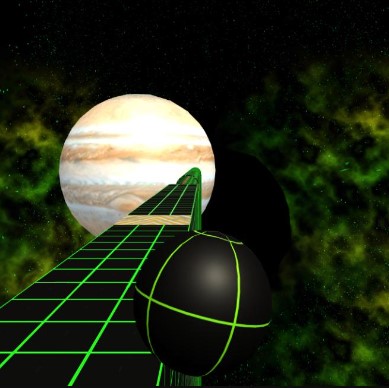
Extreme Run 3D is a level-based ball-rolling game that earns its name. Where most games in the rolling ball genre rely on a single endless track and escalating speed to generate difficulty, Extreme Run 3D takes a different approach: every level is a distinct, hand-crafted course with its own layout, hazard configuration, and completion challenge. There is no single slope to master — there are dozens, each one a new problem to solve.
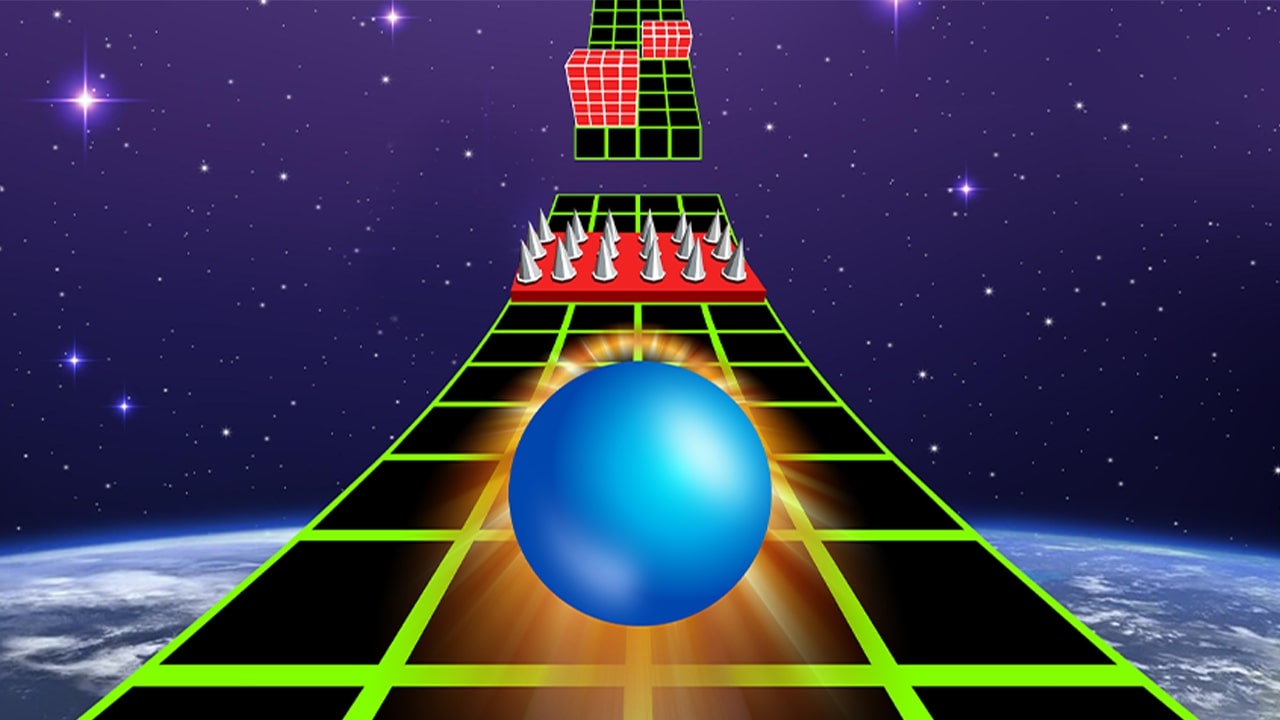
The game puts you in the seat of a high-speed driver navigating a 3D ball down courses that twist, break, and tilt in ways a straight slope never could. Broken platform sections demand timing. Steep diagonal sections require controlled momentum. Dense white spike formations in later levels are so tightly packed that raw reflex alone isn't enough — you need to know the spike layout before you arrive at it. The game actively rewards players who study levels across multiple attempts rather than those who try to react their way through.
What makes Extreme Run 3D genuinely distinctive is the upgrade system. Between runs, players can invest in character skill and equipment upgrades that provide tangible performance improvements — better handling, increased resilience, or advantages in specific level types. This persistent progression layer transforms the game from a pure skill test into a hybrid of reflexes and strategic resource management: knowing which upgrades matter most for the level you're currently stuck on is as important as knowing the level itself.
Beautiful 3D scenery wraps every course, making each new level feel like a destination rather than just another track. If you've outgrown the endless runner format and want a ball-rolling game with structure, variety, and something to build toward between sessions, Extreme Run 3D delivers all three.
Key Details:
| Field | Info |
|---|---|
| Genre | Level-Based Ball Runner / Arcade |
| Difficulty Level | Hard (escalates significantly in later levels) |
| Average Play Time | 5–20 minutes per session |
| Best For | Players who prefer structured levels over endless runs, upgrade-system fans, precision gamers |
How to Play Extreme Run 3D?
Getting Started:
- Select a level from the stage map — begin with the earliest available level to learn the core mechanics.
- Use the arrow keys to roll the ball in the direction you want across the 3D course.
- Stay on the platform — broken sections, diagonal ramps, and gaps will send the ball into the void if you misjudge them.
- React to hazards as they appear; in later levels, learn spike layouts across multiple attempts rather than reacting blind.
- Complete each level to unlock the next and earn resources for the upgrade system.
Basic Controls:
| Key | Action |
|---|---|
↑ Up Arrow | Roll forward |
↓ Down Arrow | Roll backward |
← Left Arrow | Roll left |
→ Right Arrow | Roll right |
Objective: Navigate the ball through each level's distinct 3D course without falling off the platform or hitting lethal hazards. Each level has its own layout, obstacle configuration, and completion condition — clear it to advance to the next. Invest earned resources in character and equipment upgrades between levels to improve performance on increasingly difficult courses. Later levels with dense spike formations require map knowledge in addition to reflexes.
Extreme Run 3D Features & Highlights
✓ Distinct level layouts — Every level is a unique, hand-crafted course with its own geometry, hazard placement, and challenge type — no two levels play the same way.
✓ Character skill and equipment upgrades — Invest in persistent improvements between levels that provide tangible performance advantages on harder courses, adding a strategic progression layer to the reflex challenge.
✓ Broken and diagonal platform sections — Course geometry that actively disrupts momentum and demands timing-based navigation rather than simple directional steering.
✓ Dense spike formations in advanced levels — Late-game obstacle clusters that require knowledge of the map layout to navigate — pattern recognition and route planning become as important as raw reaction speed.
✓ Immersive 3D scenery — Visually distinct environments across levels that make each new course feel like a new destination within a larger world.
Extreme Run 3D Tips & Strategies
Beginner Tips:
- Roll slowly through sections you haven't seen before. Unlike endless runners where speed is the primary driver of difficulty, Extreme Run 3D gives you some control over your pace. Use it. Slow down on unfamiliar sections — a measured approach through a new obstacle configuration costs less than a fast crash that sends you back to the start.
- Study the course during failed attempts, not just when you're rolling. Every run that ends in failure is also a scouting mission. Note where the broken sections are, where the diagonal ramps change your momentum, and where the first spike clusters appear. The information gathered in a failed run is the foundation for a successful one.
- Invest in upgrades that address your current sticking point. The upgrade system is most powerful when used diagnostically. If you're consistently losing control on diagonal sections, prioritise handling upgrades. If spike collisions are ending your runs, look at resilience or specific hazard-resistance options.
Advanced Strategies:
- Memorise spike cluster layouts before entering them at speed. In later levels, white spike formations are dense enough that real-time reaction cannot reliably thread through them. Identify the safe corridor through each cluster on slower practice attempts, then execute the committed path at full speed on your scoring run.
- Use backward rolling deliberately as a speed-reduction tool. The Down Arrow can slow or reverse your momentum. Before steep diagonal sections or tight obstacle clusters, a brief backward roll bleeds off speed and gives you more time to position correctly — a technique that becomes critical in the most demanding late-game courses.
- Complete earlier levels fully before advancing. Each level is designed to introduce a specific mechanic or hazard type that later levels build on. Players who skip or rush through early levels encounter advanced course elements without the movement vocabulary to handle them. The structured level progression is the game's built-in tutorial.
What to Watch Out For:
- Momentum loss on broken platform sections. Broken sections don't just require timing — they interrupt your rolling rhythm in ways that affect how you enter the next obstacle. After clearing a broken section, reestablish your controlled speed before the next challenge rather than carrying whatever erratic momentum the broken section left you with.
- Diagonal sections amplifying speed unpredictably. Steep diagonal ramps can dramatically accelerate the ball in ways flat sections don't. If a diagonal section leads directly into a spike cluster or a narrow platform edge, plan for the speed increase before the ramp, not after you're already on it.
Extreme Run 3D Elements Explained
Level Design System
Extreme Run 3D's level design system is the feature that most decisively separates it from the endless runner format. Rather than a single procedurally generated track, the game presents a library of distinct, hand-crafted levels, each with a fixed layout that players encounter the same way every time. This design philosophy transforms the game's learning model: in an endless runner, you adapt to randomness; in Extreme Run 3D, you study a specific course across multiple attempts until you know it well enough to complete it.
Each level introduces its own combination of platform types, hazard configurations, and course geometry. Some levels emphasise broken section timing. Others centre on diagonal ramp momentum management. Later levels build around spike formation navigation that demands committed memorisation of the safe path before attempting at competitive speed. The variety across the level library ensures that no single skill dominates — players must develop a broad mechanical repertoire to progress through the full roster.
The fixed layout also enables genuine mastery in a way procedural generation cannot. A player who has completed a difficult level cleanly has specifically understood and physically executed a particular set of challenges — not just survived random generation. This makes completions feel correspondingly more earned and personally meaningful.
Upgrade System
The upgrade system is Extreme Run 3D's most distinctive mechanical layer and the feature that separates it from pure-skill ball runners. Between levels, players invest resources earned from completed runs into character skill improvements and equipment upgrades that provide tangible performance advantages on subsequent levels.
The system works most powerfully when used with specific level challenges in mind. Handling upgrades reduce the ball's sensitivity to diagonal forces and sudden directional changes — directly addressing the most common source of run failure on ramp-heavy levels. Resilience or collision-tolerance upgrades provide additional margin against spike contacts that would otherwise end a run immediately. Speed or momentum upgrades affect how the ball behaves through broken section gaps where launch speed is critical.
Unlike cosmetic unlock systems that change appearance without affecting play, Extreme Run 3D's upgrades genuinely change what the player is capable of on a given level. A course that was previously too demanding with base-level equipment can become approachable after targeted upgrades — making the system a form of difficulty modulation that players control, rather than a passive reward loop.
Spike Formation Challenge System
White spike formations are Extreme Run 3D's most demanding obstacle type and the hazard that most clearly differentiates its later levels from earlier ones. Spikes appear individually in early levels as clear, avoidable hazards. In advanced levels, they form dense clusters — tight, multi-spike configurations that cover enough of the platform surface that no single path through them is obvious at first glance.
These dense formations require a different approach than reflex-based obstacle avoidance. The ball cannot be steered through a dense spike cluster by reacting to individual spikes as they appear — the formations are too tight and the ball moves too fast for that strategy to succeed reliably. Instead, advanced spike sections must be approached with pre-committed route knowledge: identify the specific corridor through the formation during slower or failed attempts, plan the exact sequence of inputs required to thread through it, and execute that committed path on subsequent attempts.
This shifts the game's skill requirement at high levels from pure motor control toward a combination of analytical planning and precise execution — a dual demand that distinguishes Extreme Run 3D's late-game challenge from anything an endless runner's escalating speed can produce.
Extreme Run 3D Frequently Asked Questions
Q: How do I navigate through dense spike formations in later levels? A: Dense spike clusters cannot be cleared through real-time reaction alone — the formations are too tight and the ball moves too fast. Instead, use slower or failed attempts to study the specific corridor through each cluster. Identify the exact path the ball must take, the inputs required to stay on that path, and commit to executing it as a memorised sequence on your next attempt. Pattern knowledge, not pure reflexes, is what clears advanced spike sections.
Q: How does the upgrade system work, and which upgrades should I prioritise? A: Upgrades are purchased with resources earned from completed level runs. The most effective approach is diagnostic: identify what's ending your runs on the level you're currently stuck on, and invest in the upgrade that most directly addresses that specific problem. Handling upgrades for diagonal sections, resilience for spike contacts, and momentum upgrades for gap-heavy broken sections are the three most commonly useful upgrade categories for mid-to-late level play.
Q: What should I do if I keep losing momentum on broken platform sections? A: Broken sections interrupt rolling rhythm and can leave the ball with unpredictable speed when you exit them. The key adjustment is to reestablish control immediately after clearing each broken gap — don't carry whatever erratic momentum the section produced into the next obstacle. A brief backward roll after a broken section can bleed off excess speed and let you re-enter the next challenge on your own terms.
Q: Is there a way to practise difficult sections without replaying the full level from the start? A: Extreme Run 3D's level structure means each attempt starts from the level's beginning. The most effective practice approach is to treat every failed run as a dedicated scouting mission for the section that ended it — studying the hazard layout without the pressure of a scored attempt — then applying that knowledge on the next full run. Some players find it helpful to slow down through a difficult section intentionally on several consecutive attempts before trying to clear it at full speed.
Q: How many levels does Extreme Run 3D have, and do they get significantly harder? A: The game features a multi-level progression that escalates in difficulty as you advance. Earlier levels introduce individual mechanics — broken sections, diagonal ramps, scattered spikes — in relatively forgiving configurations. Later levels combine multiple hazard types simultaneously and introduce dense spike formations that require layout memorisation. The difficulty escalation is significant between early and late levels, making the upgrade system and level study approach increasingly important as you progress.