























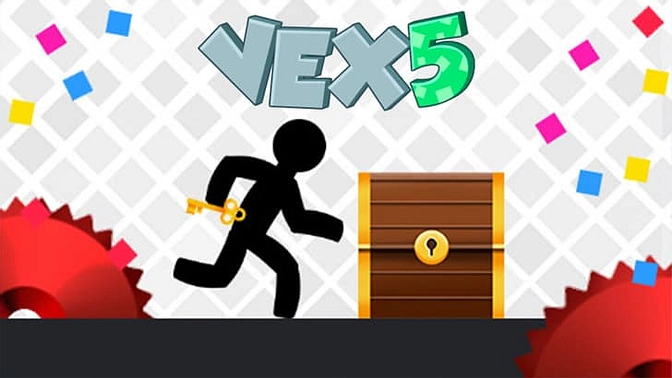
Vex 5
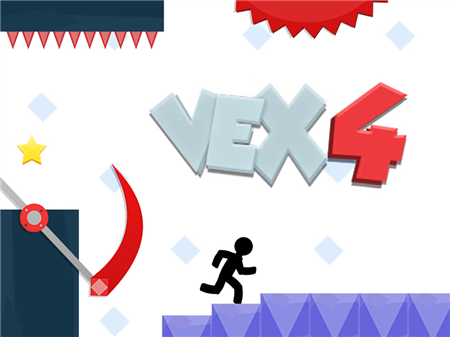
Vex 5 is the fifth entry in the landmark precision platformer series, and it arrives with the full weight of the franchise behind it: colorful 2D graphics, a fearless stickman protagonist, multiple acts of inventive trap design, and the trophy and achievement system that gives each run a purpose beyond simple completion. If you've spent time with the earlier Vex games, you already understand the philosophy — if you haven't, prepare to learn it quickly.
The Vex series has always operated on a principle of earned difficulty. Every spike, every saw blade, every falling platform is placed with intent, and every death provides information rather than arbitrary punishment. Vex 5 continues this tradition with an act structure that builds complexity systematically — early acts introduce mechanics that later acts combine in configurations that require the full vocabulary of movement the game teaches. Sprinting, jumping, crouching, and wall climbing are all essential tools, and each act finds new spatial arrangements that demand you use them all.
What distinguishes Vex 5 specifically is its trophy and achievement layer. Beyond completing acts and unlocking their Hard Mode variants, a dedicated trophy system tracks performance milestones across the game — offering recognition for speed, precision, and completionist play that extends engagement well beyond the base campaign. Colorful, visually expressive level design makes each act feel distinct and identifiable, and the intuitive WASD and arrow key controls ensure the game never places its challenge in the inputs themselves. Vex 5 is a game that demands your skill, respects your persistence, and rewards your improvement at every stage.
Key Details:
| Field | Info |
|---|---|
| Genre | Precision Platformer / Skill Game |
| Difficulty Level | Hard (escalates across acts; Hard Mode per act adds further challenge) |
| Average Play Time | 10–30 minutes per session |
| Best For | Vex series fans, precision platformer enthusiasts, trophy and achievement hunters |
How to Play Vex 5?
Getting Started:
- Start with the first act — the opening stages introduce movement mechanics before trap complexity escalates.
- Use arrow keys or WASD to move, jump, crouch, and wall climb through each act.
- Reach the act's terminus to complete it and unlock that act's Hard Mode variant.
- Activate flagpole checkpoints throughout each act — dying respawns you at the most recently triggered one.
- Track available trophies and plan act runs that target specific achievement conditions.
Basic Controls:
| Key | Action |
|---|---|
← / A | Move left |
→ / D | Move right |
↑ / W | Jump |
↓ / S | Crouch / Slide |
Objective: Complete every act by reaching its terminus. Die to a trap and respawn at the last flagpole checkpoint activated. Finish each act to unlock its Hard Mode variant, which introduces denser and more dangerous obstacles than the standard version. Earn trophies by meeting specific performance milestones across acts. Complete the full act roster and challenge yourself to clear every Hard Mode version for total mastery of Vex 5.
Vex 5 Features & Highlights
✓ Trophy and achievement system — A dedicated milestone-tracking layer that recognises speed, precision, and completionist play beyond simple act completion, providing goals that extend engagement across the full game.
✓ Hard Mode per act — Every act has a Hard Mode variant unlocked upon standard completion, adding more lethal obstacles and demanding higher precision from players who want an additional challenge tier.
✓ Colorful 2D visual design — Expressive, visually distinct level art that makes each act identifiable and keeps the visual environment engaging across a full act roster.
✓ Full movement vocabulary — Run, jump, crouch, slide, and wall climb give the stickman a broad physical toolkit that each act deploys in distinct combinations.
✓ Flagpole checkpoint system — Spaced respawn points throughout each act that preserve progress through difficult sections without permanently removing the consequence of carelessness.
Vex 5 Tips & Strategies
Beginner Tips:
- Don't rush past flagpoles. A flagpole that feels unnecessary when you're running confidently becomes essential after a death on an unexpected trap two sections later. Make flagpole activation automatic — touch every one you pass, without exception.
- Wall climb as a survival tool, not just a traversal one. When a jump carries you too far and you're about to land on a spike, redirecting into a nearby wall and climbing briefly can save the run. Train yourself to see walls as potential handholds rather than just obstacles.
- In Hard Mode, treat your standard act knowledge as a starting point, not a complete map. Hard Mode adds new obstacles and modifies existing ones — spatial memory from the standard version helps orient you, but the specific hazard positions you've memorised may no longer be accurate. Re-scout each section on your first Hard Mode attempt.
Advanced Strategies:
- Plan trophy-targeted runs separately from completion runs. Some trophies require specific actions during a run that may conflict with your natural survival strategy — taking a particular route, avoiding a specific type of death, or completing a section within a time constraint. Planning a dedicated attempt around a specific trophy prevents you from compromising both the completion run and the trophy attempt simultaneously.
- Use crouch slides through high-speed sections where ceiling clearance is tight. The slide mechanic maintains forward momentum while reducing the character's vertical profile — useful not just in designated narrow corridors but in any section where jumping would bring the character's head dangerously close to a ceiling spike or trap. Identify these sections visually and commit to the slide before you reach them.
- Practise the opening of each Hard Mode act in isolation before full-run attempts. Hard Mode's earliest sections are where the new obstacle difficulty is most disorienting relative to your standard act expectations. Running the opening section multiple times to establish its new timing requirements before attempting the full act saves significant time compared to full-act restarts from the beginning each time.
What to Watch Out For:
- Saw blades positioned at slide-height. Some saw blade placements in Vex 5 are positioned exactly where a crouch slide would carry the character — a deliberate design choice that punishes the instinctive slide response in those sections. Before sliding into any section with saw blades at low height, visually confirm the blade's exact position relative to the slide trajectory.
- Platforms that fall when stood on. Falling platforms in Vex 5 require the character to keep moving rather than pausing to assess the next section from a stable position. If you land on a platform and it immediately begins descending, treat it as a moving surface and plan your next jump before it drops to a dangerous level.
Vex 5 Elements Explained
Act Progression & Hard Mode System
Vex 5's act progression structure follows the series standard of building mechanical complexity systematically across a roster of acts that each require their own approach rather than a single universal strategy. Acts progress from accessible openings that teach individual mechanics to later stages that combine those mechanics in demanding configurations. The act structure is also the gateway to Hard Mode — completing any act unlocks its Hard Mode variant, which presents the same spatial layout populated with more lethal and numerous obstacles.
Hard Mode functions as a second campaign layer built on top of the first. Players who approach Hard Mode with thorough standard act knowledge find it demanding but grounded in familiar spatial context — they know where the major sections are and what the general navigation flow looks like, even if the specific hazard positions have changed. Players who rush into Hard Mode immediately after a difficult standard completion find it significantly more disorienting.
The relationship between standard completion and Hard Mode access is the game's most effective difficulty gating mechanism: it ensures that every Hard Mode attempt is made by a player who has already demonstrated baseline competence in the act's layout, which keeps the difficulty escalation within a learnable range rather than producing random, uncontextualised failure.
Trophy & Achievement System
Vex 5's trophy system provides performance recognition beyond the binary completion-or-not measurement that act finishing produces. Trophies are awarded for meeting specific conditions across individual acts and the game as a whole — conditions that typically require either precision (completing a section without dying), speed (finishing an act within a time threshold), or thoroughness (interacting with specific act elements that casual completion doesn't require).
The trophy system reframes repeated act engagement in a positive light. A player who has completed Act 5 but wants a trophy requiring deathless completion of a specific section has a clear, concrete reason to replay it — not just for the vague goal of "doing better" but for a defined achievable milestone. This specificity makes the trophy system significantly more motivating than a general score improvement goal, because the target condition is explicit and the feedback on whether it was met is immediate.
Trophies also create a cross-act engagement structure. Players who want to complete the full trophy roster must engage with acts at multiple performance levels — completion, then Hard Mode, then specific achievement conditions — producing a total engagement depth with each act that standard progression alone doesn't generate.
Stickman Movement System
Vex 5's stickman movement system is the mechanical foundation on which all other design decisions rest. The character's full movement vocabulary — running, jumping (variable height by hold duration), crouching, sliding, and wall climbing — gives the level designers a broad set of traversal options to incorporate into each act's spatial design, and each act exploits different aspects of this vocabulary in different proportions.
Variable jump height is the most continuously useful aspect of the system: a tap produces a minimal hop that clears low obstacles without excessive vertical commitment; holding the jump key produces a full-height jump for larger gaps and higher platforms. Many trap placements in Vex 5 are calibrated to a specific jump height — too high and the character's head enters a spike zone, too low and the character's body doesn't clear the obstacle. Reading the required jump height from the obstacle's geometry before committing to the input is the reflexive skill the system builds across the full act roster.
Wall climbing adds a vertical dimension to sections that pure floor-level movement cannot address, and creates alternative routes through spike-dense sections where the floor route is too hazardous. Acts in later stages of the game regularly require the player to identify and use wall climbing paths that aren't obvious on first visual inspection of the section.
Vex 5 Frequently Asked Questions
Q: How do I unlock Hard Mode for an act? A: Complete the standard version of any act by reaching its terminus. Upon completion, that act's Hard Mode variant becomes available from the act selection screen. Hard Mode adds more lethal obstacles to the same spatial layout — standard act knowledge is necessary but not sufficient for Hard Mode navigation. Approach each Hard Mode act's opening sections as a scouting run before attempting full completions.
Q: What happens when I die in Vex 5? A: You respawn at the most recently activated flagpole checkpoint within the current act. If you haven't activated any flagpole, you restart from the act's beginning. The respawn is immediate — press the respawn input to return to the checkpoint position and resume from that point. Your total death count is tracked but does not affect access to any game content.
Q: How do I earn trophies? A: Trophies are earned by meeting specific performance conditions during act play — conditions visible in the trophy menu before attempting them. Each trophy specifies exactly what must be achieved: a deathless section, a time threshold, a specific navigation choice, or a completionist action. Plan dedicated attempts around individual trophy conditions rather than trying to meet multiple trophy requirements in the same run, as their conditions frequently conflict with each other.
Q: Is wall climbing required, or can I avoid it? A: Wall climbing is required in specific sections of later acts where the level design explicitly uses vertical walls as the only navigational path through a section. It is not avoidable in those sections. In other sections, wall climbing is an optional alternative route that is often safer than the floor-level path. Learning wall climbing control early makes the sections where it's mandatory significantly less disorienting when you reach them.
Q: How does Vex 5 differ from Vex 4? A: Vex 5 continues the series' act-based structure and Hard Mode unlock system while introducing an expanded trophy and achievement layer that Vex 4 developed more modestly. The colorful 2D visual design is more expressive than earlier entries. The act roster is designed with fresh trap combinations and spatial layouts distinct from Vex 4, ensuring that series veterans face genuinely new challenges rather than variations of familiar configurations. Core controls and movement mechanics remain consistent with the series standard.