







Flappy Bird
Flappy Bird is one of the most culturally significant games of the mobile era — a one-button endless game that captivated hundreds of millions of players worldwide with its punishing simplicity. Developed by Dong Nguyen and originally released on mobile, its HTML5 browser version keeps the experience fully intact: tap to fly, navigate the gaps between pipes, and try to get further than you did last time. That's the entire game. And somehow, it's endlessly compelling.
The genius of Flappy Bird is in the precision it demands from an input that could not be simpler. Each click or tap lifts the bird upward; releasing lets gravity pull it back down. Threading the bird through the narrow gaps between the green pipes requires a continuous rhythm of taps — not too fast, not too slow, timed to the exact arc the gap demands. Getting that rhythm wrong by a fraction sends the bird into a pipe or the ground. Getting it right, even for a few more pipes than your previous best, produces a satisfaction disproportionate to the apparent complexity of the challenge.
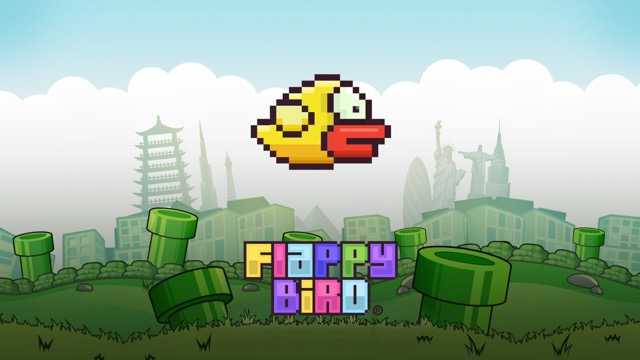
The original's stripped-back visual style — a cheerful cartoon bird against a scrolling blue sky, classic green pipes, and a simple score counter — gives the game an instant-classic aesthetic that has remained recognisable across every version and parody since its original release. This browser version stays faithful to that design while making the game accessible without an app download. Whether you played the original at the height of its cultural moment or are discovering it now, Flappy Bird is one of those rare games where the gap between understanding the rules and actually being any good at it is deep enough to hold your attention indefinitely.
Key Details:
| Field | Info |
|---|---|
| Genre | Endless Skill / Arcade |
| Difficulty Level | Hard (immediate and unforgiving from the first pipe) |
| Average Play Time | 1–5 minutes per run |
| Best For | All ages, reflex gamers, casual competitive players, score chasers |
How to Play Flappy Bird?
Getting Started:
- Open the game — the bird is ready to fly immediately.
- Click or tap to begin; the first click lifts the bird upward.
- Continue clicking at a rhythm that keeps the bird within the vertical gap between each pair of pipes.
- Each pipe pair successfully navigated adds one point to your score.
- When the bird hits a pipe or the ground, the run ends — click to restart immediately.
Basic Controls:
| Input | Action |
|---|---|
| Mouse Click / Tap | Flap wings upward |
Objective: Guide the bird through as many pipe gaps as possible without touching any pipe or the ground. Your score equals the number of pipe pairs successfully navigated. There is no end, no finish line, and no checkpoint — the run continues until contact with any surface, and your score is simply how far your timing held. Beat your previous best to improve, and beat others' scores to compete.
Flappy Bird Features & Highlights
✓ One-button gameplay — The simplest possible control scheme — a single click or tap — combined with a precision demand that reveals genuine depth far beyond its apparent simplicity.
✓ Immediate, unforgiving challenge — No tutorial, no warmup, and no grace period — the first pipe appears quickly and the gap tolerance is the same throughout every run.
✓ Endless score chasing — No defined maximum, no level cap, and no unlock gates — the score is pure, the goal is always one more pipe, and there is always a reason for one more run.
✓ Classic cartoon visual style — The original Flappy Bird aesthetic faithfully preserved in browser form — instantly recognisable and deliberately undistracting.
✓ Two-player variant — A two-player mode features a yellow and a pink bird played simultaneously, with one player controlling each — a cooperative challenge that adds social play to the solo format.
Flappy Bird Tips & Strategies
Beginner Tips:
- Find a tapping rhythm before focusing on gaps. New players often react to each pipe individually, tapping in response to each gap as it arrives. This reactive approach consistently produces erratic arcs that clip pipes or the ground. Instead, establish a baseline clicking rhythm that keeps the bird at mid-screen height, then adjust slightly for each gap's specific position.
- Aim for the middle of each gap, not just through it. Targeting the dead centre of each pipe gap — rather than just trying to clear the opening — provides maximum clearance on both the top and bottom pipe. This margin is what prevents a slightly miscalculated tap from clipping an edge.
- Don't stare at the bird — look at the next gap. Watching the bird's position rather than the upcoming gap is the most common beginner error. The gap's position determines what your tap timing needs to be; the bird's position is the result of past inputs, not future ones. Shift your visual focus forward.
Advanced Strategies:
- Develop a consistent tap rhythm and adjust minimally from it. The most reliable high-score strategy is a steady baseline tap rhythm that maintains the bird at approximately mid-screen height, with minor adjustments for pipe gaps that are positioned unusually high or low. Wide variations from a consistent rhythm are the primary cause of late-run pipe contacts among experienced players.
- Mentally categorise each gap as high, middle, or low before it arrives. Pipe gaps are positioned at varying heights — consistently high, consistently low, or mid-range. Identifying a gap's category from a distance and making a single deliberate adjustment to your rhythm for that category, then returning to your baseline, is more precise than making reactive adjustments at every pipe.
- In two-player mode, coordinate tap timing through verbal calls. Managing two birds simultaneously requires either one player responding to the other's rhythm or explicit verbal coordination of tap timing. The most successful two-player pairs establish whose timing leads and whose follows — or call out each needed tap — rather than both players attempting to react independently to both birds.
What to Watch Out For:
- Gravity pulling faster than expected after a long gap between taps. Flappy Bird's gravity is constant and unforgiving — the bird falls at the same rate whether you've been tapping steadily or have paused. After a section requiring fewer taps (a lower gap), the bird's downward velocity is higher than beginners expect, and the next tap needs to be earlier and more frequent than the previous rhythm. Never assume the bird is "level" after fewer taps.
- Overcompensating after a close call with the top pipe. Clipping the underside of a top pipe — surviving by a narrow margin — often prompts an immediate burst of taps to get away from it, which carries the bird directly into the bottom pipe of the same or next gap. After a close call, return immediately to your baseline rhythm rather than tapping reactively to the near-miss.
Flappy Bird Elements Explained
One-Button Tap & Gravity System
The tap and gravity system is the entirety of Flappy Bird's mechanical design — and its depth derives entirely from the interaction between a single controlled input and an uncontrolled physical force. Each tap applies a fixed upward velocity to the bird; gravity continuously applies a fixed downward force. The bird's altitude at any given moment is the product of the number and timing of recent taps in combination with the constant gravitational pull.
This creates a control system that is simultaneously simple and deeply expressive. The player has no direct control over the bird's speed, direction, or altitude — only over the frequency and timing of upward impulses. Managing the bird's altitude through the gaps is an exercise in momentum management: understanding how many taps are needed to reach a target height and how quickly gravity will pull the bird back down from that height after tapping stops.
The system's deceptive depth emerges from this momentum requirement. New players treat each tap as a direct positioning command — tap to go up, stop to go down. Experienced players understand that each tap is an impulse that sets a trajectory in motion, and that the correct tap timing for any given gap is a function of the bird's current velocity at the moment of the tap, not just its current position. This distinction — between reactive positioning and momentum management — is what separates low scores from high ones.
Pipe Gap System
The pipe gap system is Flappy Bird's only obstacle design, and its simplicity is deceptive. Each pipe pair consists of a top pipe extending downward from the ceiling and a bottom pipe extending upward from the floor, with a fixed-width gap between them. The gap is the same width on every pipe pair; the variable is the vertical position of the gap, which changes from pair to pair across the run.
This single variable — gap height — is what produces the game's full difficulty. A gap positioned at mid-screen requires no adjustment from a steady mid-height rhythm. A gap positioned near the top of the screen requires a burst of additional taps to reach the required altitude; a gap near the bottom requires restraint from tapping to allow the bird to descend to the required position. Misreading a gap's position — approaching a high gap without sufficient upward momentum, or a low gap without sufficient downward travel time — is the cause of virtually every pipe contact.
The gap system's consistency is also its fairness: the gap width never changes, the pipe scroll speed never accelerates, and no gap is intentionally positioned to be unreachable from the previous one. Every pipe pair the player fails to clear was, in principle, clearable with correct tap timing. This design makes every death feel instructive rather than arbitrary — the information about what timing would have cleared the pipe is visible in the arc the bird took.
Two-Player Mode
The two-player mode is Flappy Bird's social extension — a variant that places two birds on screen simultaneously, each controlled by a different input and requiring independent navigation through the same pipe gaps at the same time. The yellow bird is controlled by one player, the pink bird by another, with both navigating the identical gap sequence from positions that may diverge significantly as tap timings differ between players.
The mode creates a cooperative challenge fundamentally different from the solo game's solo mastery loop. In solo play, the only variable is the player's tap timing. In two-player mode, two independent timing systems must each successfully navigate the same gaps, meaning a single player's mistap ends both birds' runs simultaneously. This interdependence transforms the game's difficulty model: average solo performance from two players produces worse combined results than either player's solo best, because the runs must both succeed simultaneously rather than independently.
Successful two-player play requires either implicit rhythm synchronisation — both players naturally developing compatible tap tempos — or explicit coordination, where players communicate about the upcoming gap's position and adjust their timing accordingly. The added social dimension of shared failure and shared success gives the mode a very different emotional character from solo Flappy Bird's solitary, introspective score chase.
Flappy Bird Frequently Asked Questions
Q: Why does the bird keep hitting the bottom pipe when I'm aiming above it? A: The bird's downward velocity after a series of taps is higher than it appears mid-arc. When approaching a gap positioned lower on the screen, the bird is typically descending faster than new players account for — tapping once more before the gap to slow the descent, rather than expecting the current arc to carry cleanly through the bottom section of the opening, produces more reliable clearance of low-positioned gaps.
Q: What is the best tap rhythm for consistent scores? A: There is no universally correct rhythm — the right baseline depends on your click speed and the typical height range you're trying to maintain. The most consistent approach is to find a rhythm that keeps the bird naturally at mid-screen height with minimal adjustment, then develop two specific modifications: a slightly faster tap rate for gaps positioned above mid-screen, and a deliberate pause in tapping for gaps positioned below it. Practise the baseline rhythm until it feels automatic before adding the gap-position adjustments.
Q: How is the browser version of Flappy Bird different from the original mobile game? A: The browser version is an HTML5 recreation that faithfully replicates the core mechanics — the tap-and-gravity system, pipe gap difficulty, and visual style — of the original mobile game that developer Dong Nguyen removed from the App Store. Controls are adapted for browser play, with mouse clicks replacing touchscreen taps. The gameplay experience is effectively identical to the original for all mechanical purposes.
Q: How does two-player mode work? A: In two-player mode, two birds appear on screen simultaneously — a yellow bird and a pink bird. One player controls the yellow bird with the Up Arrow key; the other controls the pink bird with the Spacebar. Both birds must navigate the same pipe sequence at the same time, and the run ends when either bird contacts a pipe or the ground. Communication and rhythm coordination between players is more important than individual tap skill in this mode.
Q: Is there any way to slow down the pipes or make the game easier? A: The standard Flappy Bird experience has no difficulty settings — pipe scroll speed and gap width are fixed throughout every run. The only variable is the vertical position of each gap, which changes from pipe to pipe. If you find the game extremely difficult, focus on developing a consistent tapping rhythm before worrying about individual gap positions — inconsistent rhythm is the underlying cause of most early-run failures, and establishing a steady baseline dramatically extends average run length before gap-specific adjustments become the limiting factor.