
















Geometry Vibes X-Arrow
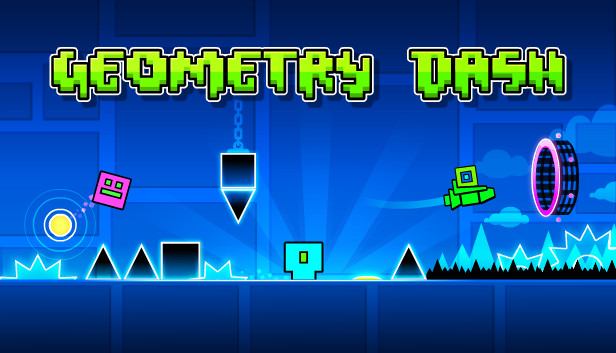
Geometry Vibes X-Arrow is a rhythm platformer / precision arcade game built around one-button precision, memorable patterns, and the rewarding flow created by learning a difficult sequence. Its action unfolds across a stylized geometric course synchronized around jumps, gates, changing forms, and tightly spaced hazards. The central idea is easy to understand: reach the end of each course or survive for as long as possible without touching a hazard. That direct premise lets a new player begin immediately, while the changing route, timing windows, and consequences of a mistake give experienced players plenty of room to improve.
The game stands out through a pace that becomes faster and less forgiving, dense obstacle avoidance, structured levels or checkpoints, music-driven timing. These qualities keep the action readable without making it predictable. A successful run depends less on random clicking and more on looking ahead, making controlled inputs, and adapting before a hazard reaches you. The best moments come when several actions connect smoothly: a clean turn leads into a jump, a narrow opening is cleared at speed, and a difficult section that ended earlier attempts finally becomes manageable.
Geometry Vibes X-Arrow is especially appealing as a browser game because its rules support short sessions without limiting long-term mastery. You can play for a few minutes, chase a better score or cleaner finish, and return with a clear idea of what to improve. The combination of immediate feedback, quick recovery after mistakes, and visible skill growth creates a strong “one more run” rhythm. Players who enjoy learning through repetition will find that progress comes from calmer decisions, better route reading, and increasingly precise control rather than from complicated menus.
Key Details:
| Genre: | Rhythm Platformer / Precision Arcade |
| Difficulty Level: | Variable — starts manageable and becomes demanding |
| Average Play Time: | 10–25 minutes |
| Best For: | Geometry Dash fans and players who enjoy timing, music, and repeatable skill challenges |
How to Play Geometry Vibes X-Arrow?
Getting Started:
- Start a run and use the opening seconds to test how strongly the game responds to each input.
- Keep to a safe central position while reading the first obstacle or route choice.
- Move early enough to create a clean line, then release the input before you overcorrect.
- Continue toward the next checkpoint or stage exit, restarting quickly after a mistake.
- Add optional pickups, shortcuts, or faster routes only after basic survival feels consistent.
Basic Controls: Available controls include click or tap. Check the in-game prompts because mobile and desktop builds may present equivalent inputs differently.
Objective: Reach the end of each course or survive for as long as possible without touching a hazard. Success comes from combining accurate inputs with early route recognition and maintaining control as the challenge becomes more complex.
Game Features & Highlights
- ✓ Immediate arcade gameplay — the objective is clear from the first attempt and requires very little setup.
- ✓ Escalating speed — Structured stages provide clear milestones and a reason to master each new pattern.
- ✓ Readable feedback — movement, collisions, and safe routes provide clear information for the next attempt.
- ✓ Skill-based improvement — better timing and positioning have a visible effect on performance.
- ✓ Meaningful replay goal — A score, distance, or completion goal gives every retry a measurable purpose.
Tips & Strategies
Beginner Tips:
- Treat early attempts as pattern-learning runs rather than score attempts.
- Use short, deliberate presses so each jump starts where you expect.
- Listen for rhythmic cues, but confirm them against the visible hazards.
Advanced Strategies:
- Memorize transitions between movement forms, not just individual jumps.
- Practice difficult sequences with a consistent input rhythm.
- Stay relaxed after a near miss; panic clicks usually create the next mistake.
What to Watch Out For:
- Holding an input too long changes jump height or flight time.
- Visual effects can distract from collision edges; focus on the playable lane.
Game Elements Explained
Input Timing and Rhythm System: Geometry Vibes X-Arrow turns a small control set into a continuous positioning problem. Inputs do not matter only at the instant they are pressed; they also determine where you will be when the next obstacle appears. That is why controlled movement is more reliable than frantic correction. Start by learning how far the character, vehicle, or ball moves after a brief press. Then compare that response at different speeds and during jumps, slopes, or turns. The goal is to create repeatable movements that place you near the center of the next safe area.
This system matters because good positioning creates time. Entering a section from a balanced location gives you more room to react in either direction, while entering from an edge forces an immediate rescue. Advanced play comes from linking movements so the end of one action becomes the setup for the next. Instead of treating every hazard separately, plan a short sequence: approach, commit, recover, and recenter. When the pace increases, reduce unnecessary movement and trust smaller adjustments. Consistency within this system is the foundation for higher scores and more reliable finishes.
Pattern Learning and Progress System: The course communicates what is coming through spacing, color, shape, motion, and repeated arrangements. Learning to read those signals is as important as raw reaction speed. A wide opening may invite early movement, while a narrow gate often rewards waiting until your line is confirmed. Moving hazards should be judged by where they will be when you arrive, not where they are when first seen. Static patterns can often be solved by identifying the largest safe zone and working backward to your current position.
Progress is measured through completed stages, checkpoints, and increasingly complex layouts. Use that feedback diagnostically. If attempts repeatedly end at the same place, isolate whether the problem is late recognition, an overly large input, or a poor approach position. Then change one variable at a time. Even without permanent upgrades, better route knowledge acts like progression because it makes difficult sections predictable. The strongest players combine visual reading with patience, choosing the moment that preserves control instead of the first possible moment to move.
Frequently Asked Questions
Q: How do I control the game? A: Available controls include click or tap. Check the in-game prompts because mobile and desktop builds may present equivalent inputs differently. Begin with short inputs, observe the response, and adjust the control method shown by the embedded version.
Q: What should I do if I keep failing at the same obstacle? A: Approach it from a more neutral position, watch the complete movement pattern once, and change only one part of your timing on the next attempt. Smaller corrections make the cause of failure easier to identify.
Q: Is this game compatible with mobile devices and modern browsers? A: It runs in a modern browser through an embedded HTML5 game player. Desktop generally offers the most precise controls; mobile play depends on whether the embedded build exposes touch controls.
Q: Can I save my progress? A: Progress support depends on the embedded build. When saving is available, it normally uses local browser storage, so use the same browser and avoid clearing site data.
Q: How do I unlock achievements, levels, or extra features? A: This version does not present a required permanent unlock path. Concentrate on reaching later sections, improving score, and completing any visible stage goals.