







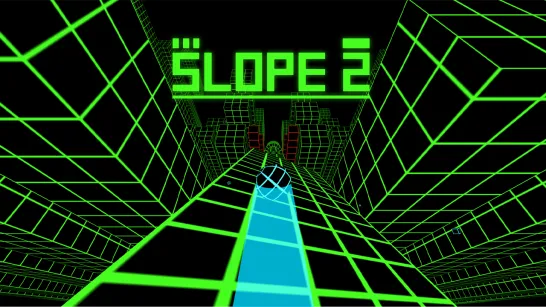



1. Slope 2 Player Overview
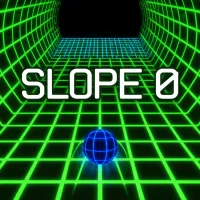
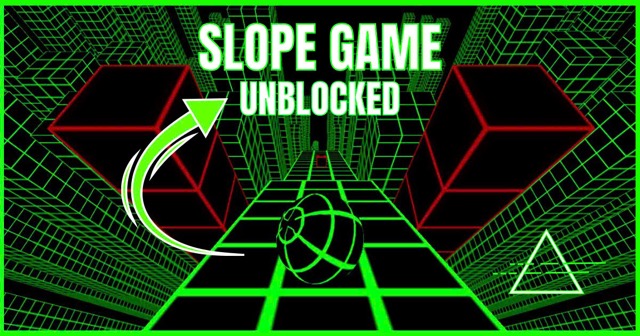
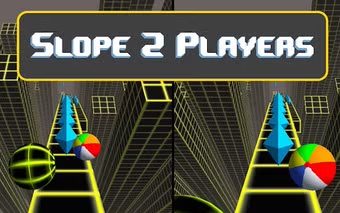
Slope 2 Player takes the solo endless runner and transforms it into a head-to-head battlefield of reflexes. Two balls, two players, one split screen, and a slope that accelerates like a runaway rollercoaster. The tension that makes a solo slope run compelling — the building speed, the shrinking reaction windows, the one-mistake-and-it's-over stakes — is present in full. But when both balls are visible side by side and you can see your opponent surviving a section you just failed, the experience changes entirely.
The competitive format doesn't just add pressure — it changes what kind of pressure it is. In solo play, the enemy is the slope itself. In Slope 2 Player, the slope is still trying to defeat both of you, but now there's also the awareness that surviving one second longer than your opponent is meaningful, not just impressive. That subtle shift — from "how far can I go?" to "can I outlast them?" — makes every near-miss feel different and every clean dodge feel like a minor victory over another human being.
The game supports multiple modes — Racing, Survival, and practice runs — giving the two-player format enough structure to suit different kinds of competitive sessions. The controls divide naturally between keyboard zones, with one player on A/D or arrow keys and the other on J/L, allowing both players to share a single keyboard without physical interference. The track is endless, randomly generated, and identical for both players — no terrain advantages, no luck disparities. Just two players, the same slope, and the question of who blinks first.
Key Details:
| Genre: | Endless Runner / Competitive 2-Player |
| Difficulty Level: | Variable (increases with speed) |
| Average Play Time: | 5–15 minutes per session |
| Best For: | Two players sharing a device; competitive friends; anyone who wants to convert slope runs into direct head-to-head duels |
How to Play Slope 2 Player?
Getting Started:
- Both players position their hands on their respective key zones before pressing Play.
- The split screen activates — each player controls a separate ball on their half of the screen.
- Player 1 uses A/D or Left/Right Arrow keys; Player 2 uses J/L (or as indicated for the version).
- Both balls face the same randomly generated slope — steer, survive, and outlast your opponent.
- The player whose ball survives longer (or covers more distance in Racing mode) wins the run.
Basic Controls:
| Player | Steer Left | Steer Right |
| Player 1 | A or ← Left Arrow | D or → Right Arrow |
| Player 2 | J | L |
Objective: Outlast or outdistance your opponent on the same randomly generated slope. Stay on the platform longer, cover more ground, and apply the same precision and calm that solo slope play demands — now under the added pressure of a live competitor on the same screen.
Slope 2 Player Features & Highlights
✓ Split-screen head-to-head format — two players race side by side on the same slope, creating direct real-time competition with no network lag
✓ Multiple game modes — Racing, Survival, and practice runs offer different competitive formats for different session types
✓ Shared keyboard controls — control zones divided naturally between keyboard sides allow two players to compete on one device without physical conflict
✓ Identical track for both players — the same randomly generated slope applies to both balls, ensuring no terrain advantage and pure reflex competition
✓ Endless accelerating slope — the same speed escalation that makes solo slope runs compelling creates mounting pressure in the competitive format
Slope 2 Player Tips & Strategies
Beginner Tips:
- Position your hands on your key zone before the run starts — reaching for the keys after the ball is already moving costs you the first second of the run, which at higher speeds can be decisive.
- Focus only on your half of the screen — the strongest instinct in split-screen is to check your opponent's ball, but every moment your eyes move to their side is a moment your ball is unmonitored.
- The center of your track half is your default position — same as solo play, central positioning gives the most dodge room. The competitive context doesn't change this fundamental.
Advanced Strategies:
- In Survival mode, the goal is outlasting your opponent, not maximizing distance. Prioritize survival over aggressive play — let your opponent make the mistake first.
- In Racing mode, distance matters, so calculated risk-taking on diamond or route shortcuts that save time has value. In Survival mode, it doesn't — conservative play is correct.
- Use light, frequent taps rather than heavy held presses for steering — the split-screen format tends to make players grip tighter and press harder under competitive pressure, which produces overcorrection. Consciously reduce your input intensity to match solo-play precision.
What to Watch Out For:
- Competitive pressure overcorrection: The most common 2-player failure mode is correcting too hard because of competitive anxiety. When you see your opponent survive a section you're struggling with, the instinct is to steer more aggressively — this is almost always counterproductive. Calm, precise inputs beat anxious large ones every time.
- Steep terrain at speed: Both players are on the same slope, which means both face the same difficult sections simultaneously. When the slope narrows or drops steeply, slow your input frequency slightly and let precision, not speed, guide your response — this is when the most mistakes happen and when the difference between the two players is decided.
Slope 2 Player Elements Explained
Split-Screen Format and Competitive Dynamics: Slope 2 Player's split-screen layout places both balls in constant visual proximity, creating a competitive context that runs parallel to the slope challenge itself. Watching your opponent's ball survive a section while yours just failed produces a specific kind of urgency that changes how the next run feels — more focused, more motivated, and often initially more error-prone because that motivation translates to harder inputs. Experienced 2-player slope players learn to manage this psychological pressure by treating their half of the screen as a complete solo game and resisting the pull of the other half. The split-screen is there for the end-of-run comparison, not for mid-run monitoring.
Game Modes — Racing, Survival, and Practice: The three available modes in Slope 2 Player create meaningfully different competitive contexts. Racing mode makes distance the deciding metric — cover more ground in a run than your opponent to win, which incentivizes calculated risks that would be unnecessary in a survival context. Survival mode makes outlasting the opponent the goal — the player whose ball stays on the platform longer wins, regardless of specific distance covered. This pure survival framing makes conservative, mistake-minimizing play the optimal strategy. Practice runs offer a lower-stakes format where both players can develop their control feel and coordinate their key zones without competitive pressure, which is particularly useful for less experienced players or for sessions focused on improvement rather than competition.
Shared Keyboard Competition: The practical mechanics of two players on one keyboard deserve attention because they affect the experience significantly. The natural key zone division — A/D or arrows for one player, J/L for the other — places both players' hands in the same physical space without direct overlap. This works well as long as both players coordinate their hand placement before the run starts, as the original game description correctly emphasizes. Reaching across another player's key zone during a run is disruptive and fair to neither. The shared keyboard format is part of what makes Slope 2 Player a genuinely social experience — the physical proximity of sitting side by side, both leaning into the screen, both reacting to the same slope, creates a shared experience that networked online play can't replicate.
Slope 2 Player Frequently Asked Questions
Q: What are the controls for each player in Slope 2 Player? A: Player 1 uses A (left) and D (right), or the Left/Right arrow keys. Player 2 uses J (left) and L (right). Make sure both players have their hands positioned on their respective key zones before pressing Play.
Q: What's the difference between Racing mode and Survival mode? A: In Racing mode, the player who covers the greater distance in a run wins — this incentivizes faster, more risk-tolerant play. In Survival mode, the player whose ball stays on the platform longer wins — this rewards conservative, mistake-minimizing play regardless of speed.
Q: Should I watch my opponent's screen during a run? A: No — looking at your opponent's half of the screen takes attention away from your own ball, which is consistently fatal. Watch your own screen exclusively during a run; use the split-screen comparison only to evaluate outcomes at the end of each run.
Q: Can Slope 2 Player be played online against remote opponents? A: Slope 2 Player is designed for two players sharing the same device and keyboard. It's not structured as a networked online multiplayer game — both players need to be physically present at the same machine.
Q: What should I do if I keep losing to my opponent? A: Focus on reducing mistakes rather than going faster. Most competitive slope losses come from errors under pressure rather than insufficient base skill. Play a few solo practice runs to reconnect with clean, precise steering, then bring that same quality of input into the competitive format.